Osman Akça Shipment & Logistics Analytics Platform.
A hybrid SAP logistics analytics solution accessible from both SAP GUI and Fiori, with a Java Spring Boot middleware layer bridging SAP and Azure AI. The project transformed Osman Akça shipment data into an interactive reporting platform with graphical dashboards and an authorization-aware AI logistics assistant — letting users analyze delivery, transportation, customer, material, container and route data through visual reports and natural-language conversation, scoped by plant-level and pricing authorizations.
From a list report to an AI-assisted platform.
The Osman Akça shipment report consolidates sales order, delivery, invoice, transportation, customer, material, container and loading data into a single place inside SAP — so logistics operations can be followed centrally instead of across scattered SAP objects.
It was built on two channels at once. The SAP GUI screen serves traditional users who want detailed, familiar list reporting; the Fiori application gives modern users a graphical dashboard and a conversational AI assistant. The same business process, reachable however the user prefers to work.
A Java Spring Boot middleware layer sits between the SAP back-end and the Azure AI model, handling data routing, session context and authorization enforcement. The AI assistant is not open-ended — it respects plant-level access controls and pricing authorizations, so each user sees only the data they are entitled to. The result is not a classic Z report. It takes SAP shipment data out of the operational-list world and turns it into an analytical, AI-assisted decision-support platform.
Why it was built.
Logistics data lived in separate SAP objects.
Delivery, invoice, transportation, customer, material, container and route information were tracked across different SAP objects. Seeing it on one screen, analyzing shipment intensity, following container breakdowns and comparing by date were all hard. And even when a classic report listed the data, it gave users no help on the interpretation side — the need for graphical analysis and natural-language Q&A grew from exactly there.
One process, two channels, plus AI.
A custom shipment-analysis solution reachable from both GUI and Fiori, connected through a Java Spring Boot middleware. The GUI screen covers the detailed-listing need of classic SAP users; the Fiori screen adds a modern dashboard layout, a graphical analysis view and an authorization-aware Azure AI chatbot — scoped by production plant and pricing permissions — so operational data can be interpreted far faster, visually and conversationally.
What's under the hood.
A single data model feeding two front-ends through a Java Spring Boot middleware, a graphical analysis layer, and an authorization-aware AI assistant on top.
SAP GUI report
Classic detailed listing of sales org, delivery, invoice, transport no, sales order, customer and material.
Fiori dashboard
Modern UI5 app with graphical analysis — container arrival times, product mix, routes, customer breakdown.
GUI → Fiori bridge
Direct hand-off from the GUI report into the Fiori analysis screen — one process, no context loss.
Unified data model
Sales order, delivery, invoice, transport, customer and material joined into one OData/CDS-served model.
Graphical analysis
Container arrival hours, product type, loading routes, container-type split, customer & period breakdowns.
Java Spring Boot middleware
Middleware layer handling data routing between SAP and Azure AI, session context management and authorization enforcement.
Azure AI assistant (authorized)
Natural-language logistics chatbot with plant-level and pricing authorization — each user sees only the data they’re entitled to.
The full stack, end to end.
ABAP, AMDP, CDS views and custom Z tables at the bottom; OData and SAP Gateway in the middle; a Java Spring Boot middleware orchestrating the AI layer; and Fiori + SAP GUI at the top — with authorization enforced at every boundary.
GUI list, Fiori dashboard, AI chat.
SAP GUI — shipment list report
SAP GUI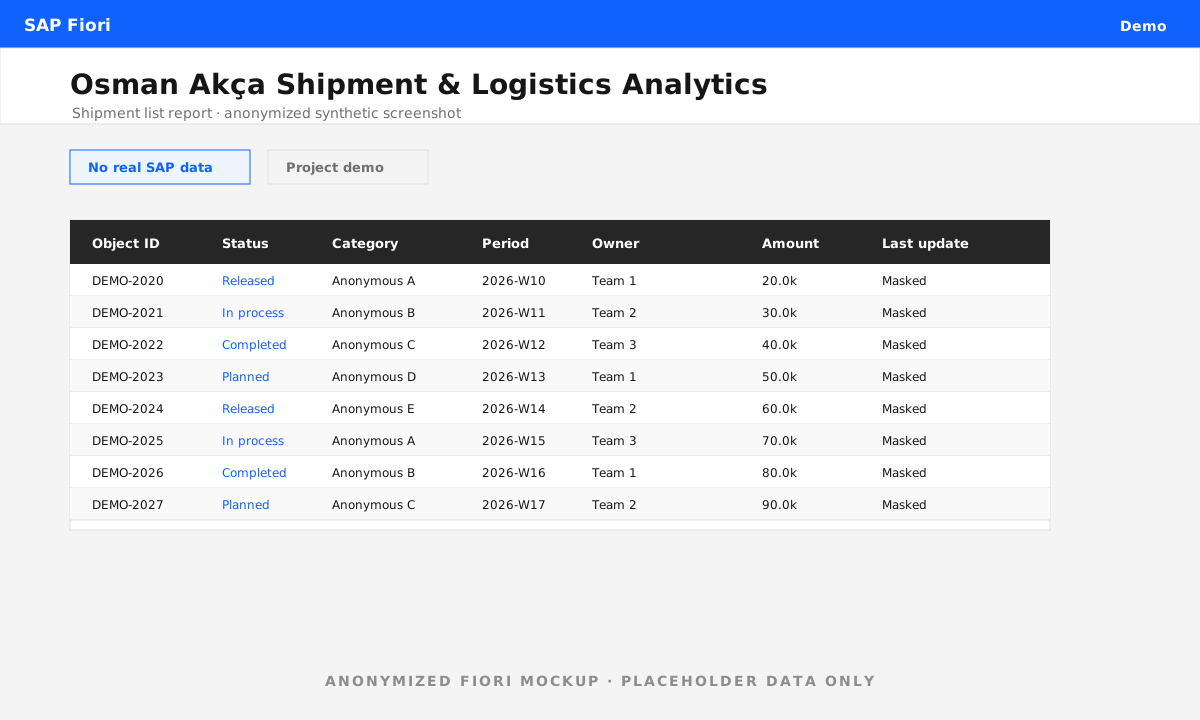
Fiori — graphical analysis dashboard
Fiori / UI5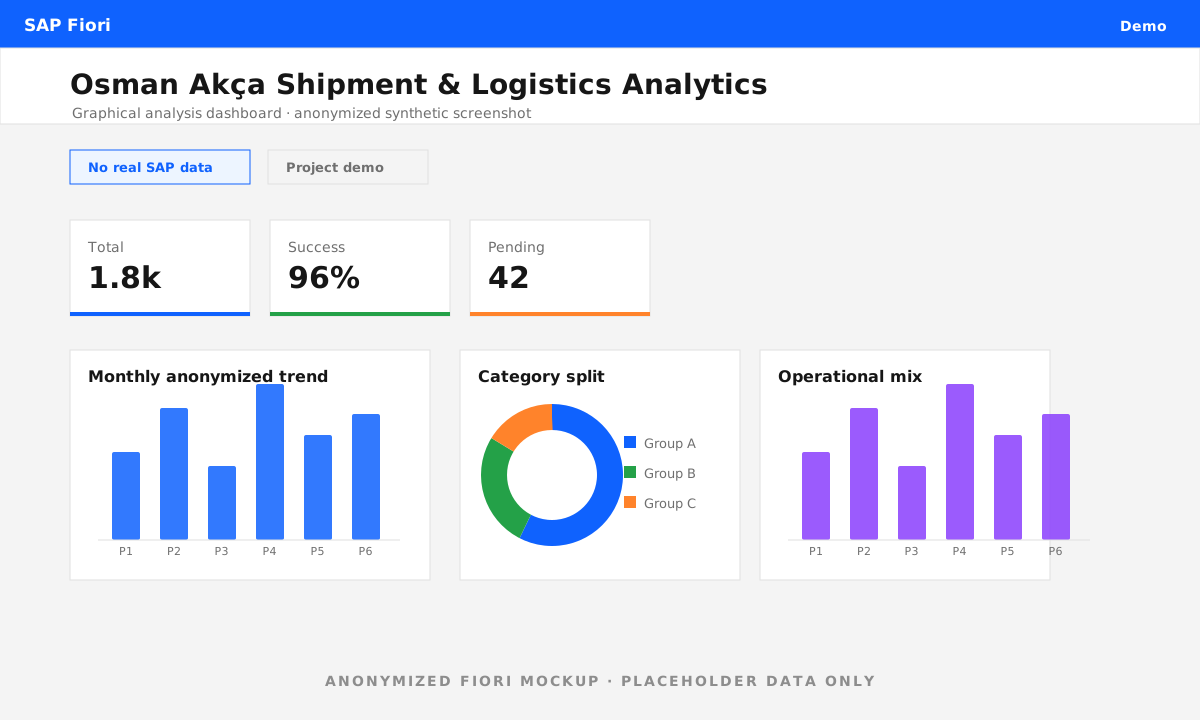
Fiori — filters & container summary
Fiori / UI5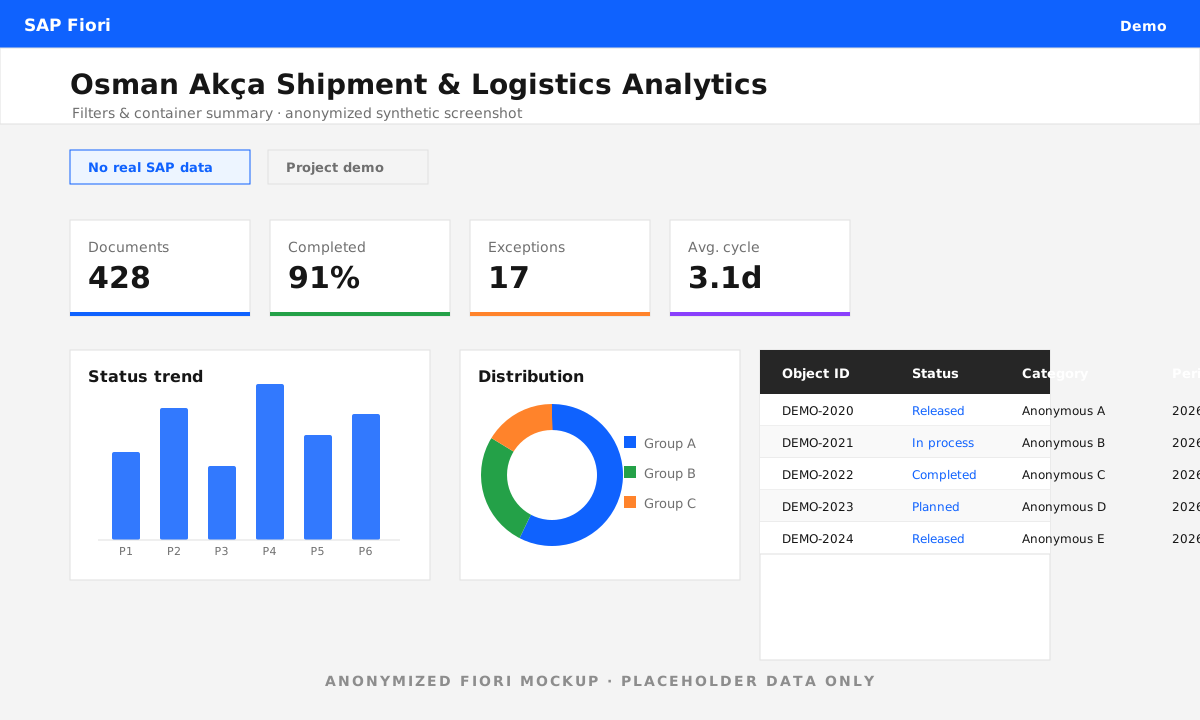
Fiori — Azure AI logistics assistant
Azure AI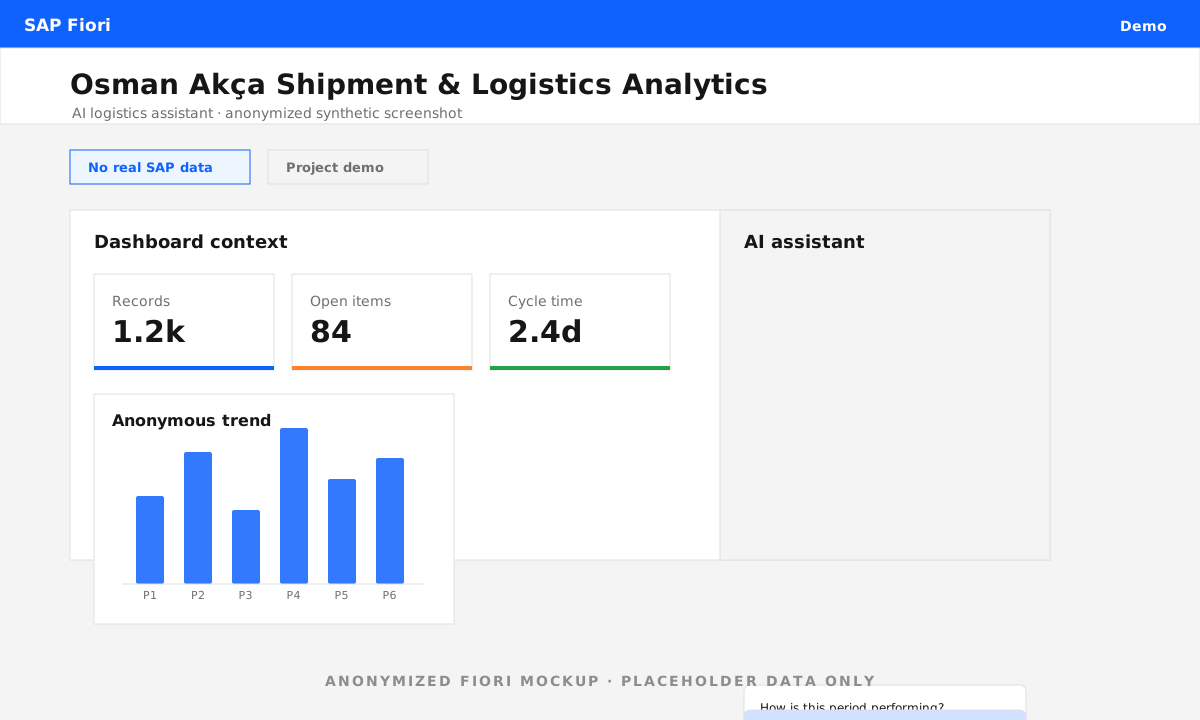
What I built.
From the ABAP data model through the Java Spring Boot middleware and the Fiori UI to the Azure AI integration — the full hybrid stack.
- SAP GUI shipment report — detailed, filterable listing for classic SAP users.
- Fiori application — modern report & dashboard UI, with a direct GUI-to-Fiori hand-off.
- OData / CDS service layer — carrying the SAP data out to the Fiori front-end.
- Java Spring Boot middleware — routing data between SAP and Azure AI, managing session context and enforcing authorization rules.
- Unified data model — sales order, delivery, invoice, transport, customer & material in one model.
- Graphical analysis screen — container arrival, product type, route, customer, container-type & period analytics.
- Azure AI chatbot integration — an authorization-aware logistics assistant answering natural-language questions, scoped by plant-level and pricing authorizations.
The impact.
Shipment data became visible from one center; users could reach the process through either classic SAP GUI or modern Fiori; container, customer, route and product breakdowns became far faster to analyze with charts; the need for manual interpretation dropped; operational decision-making sped up; and — thanks to the AI chatbot — users could get natural-language analysis of the report data, moving static SAP reporting into interactive, AI-assisted analysis.
See the other flagship deliveries.
One of 15 case studies delivered at Akça Holding. The IKEA SPI forecast suite and the QM Power BI analytics platform sit right alongside it.